


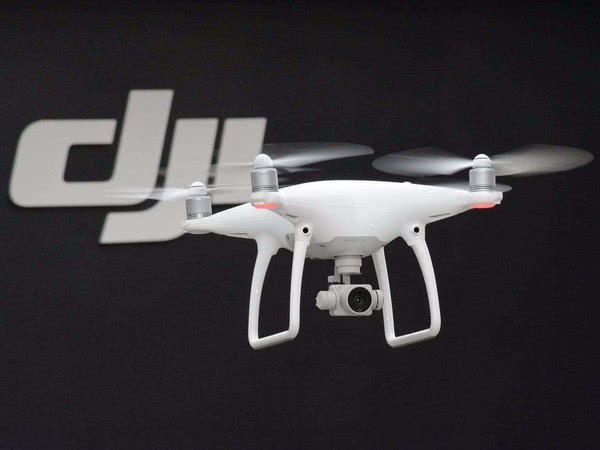
Photo Source:Ctoy.com.cn
On March 23, SZ DJI Technology Co., Ltd. (hereinafter "DJI") filed a lawsuit against Arashi Vision Inc. , which does business as Insta360, at the Shenzhen Intermediate People's Court. The case involves disputes over the ownership of six patents, with multiple former core R&D personnel from DJI alleged to be involved. The court has docketed the case.
The case reportedly marks DJI's first domestic lawsuit over patent ownership. The patents in question cover key technical fields such as unmanned aerial vehicle (UAV) flight control, structural design, and image processing.
In its complaint, DJI argues that the disputed patents were inventions made by former employees within one year after their departure, and are closely related to their work at DJI. Under China's Patent Law, such inventions should be considered service inventions, with patent application rights belonging to DJI.
DJI further noted that for two patents related to UAV flight control and structural design, Insta360's Chinese patent applications listed certain inventors as "requesting name disclosure exemption," while the corresponding Patent Cooperation Treaty (PCT) applications explicitly stated their true names. DJI claims these individuals are former core R&D personnel who had access to DJI's core technical systems.
In response, Insta360 issued a statement on March 23. The company said the employees involved had left DJI within one year, but the patent applications were independently developed innovations generated during their employment at Insta360, with a legal and compliant R&D process.
Regarding the name disclosure, Insta360 stated it strictly adhered to the inventors' wishes and complied with relevant laws and regulations.
On March 24, Insta360 said the case remains in judicial proceedings and that the final court determination will be respected. The company will continue to focus on product and technology development across gimbal cameras, audio devices, and UAVs.
Liu Jingkang, CEO of Insta360, offered a more direct response on his personal Weibo account.
Liu said the only patent potentially involved in the flight control domain was originally conceived by him, with his deep involvement in its refinement and validation. He described the patent as enabling a "dive flight" effect for UAV operation—executable with a single click, similar to that of a professional first-person view (FPV) UAV.
"It's completely understandable for giants like GoPro and DJI to feel unsettled when their market share is challenged," Liu said. "On the flip side, many features and accessories of DJI's panoramic cameras and thumb cameras have been reported by the media as being 'copied' or 'strikingly similar' to ours. A rough tally from last year suggests they might also fall within the scope of 11 of our hardware/structure patents, eight software method patents, six control method patents, and three accessory patents. However, we haven't proactively sued because, as a smaller company, our resources are limited. We prefer to prioritize R&D, focusing on differentiation to grow the market and expand the overall opportunity."
DJI did not immediately respond to these claims.
Some industry analysts view the lawsuit as a reflection of the two companies' shift from divergent paths to direct rivalry. DJI has long dominated the global consumer UAV market, while Insta360 has led the panoramic camera space. But since the second half of 2025, their strategic boundaries have blurred.
In July 2025, Insta360 entered the UAV market, launching the co-developed consumer drone brand "Antigravity" with plans for the world's first panoramic UAV. Shortly after, DJI introduced its first panoramic camera, the Osmo 360, entering Insta360's core territory.
The competition has also extended to supply chains and sales channels, with both companies vying for exclusivity and distribution advantages.
The dispute awaits further resolution by the court. Currently, DJI has not escalated the matter to allegations of trade secret misappropriation.