


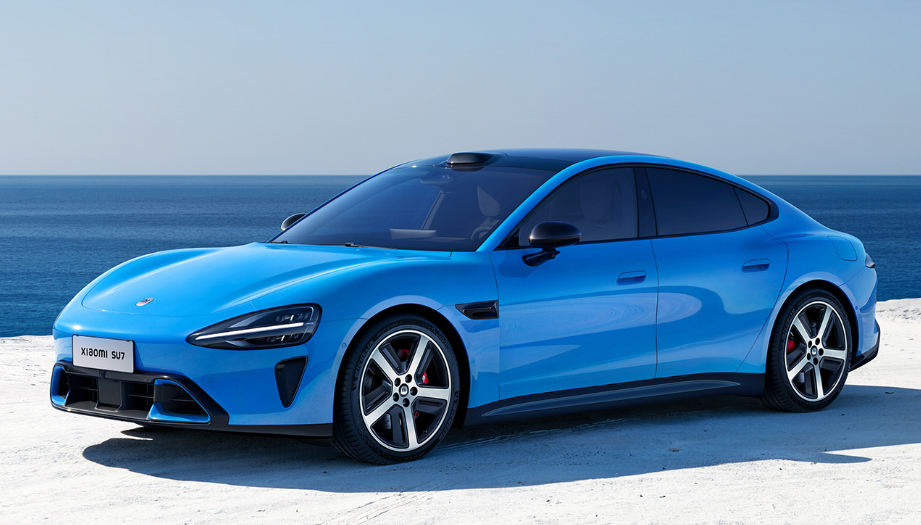
Photo Source: Xiaomi
Xiaomi's electric vehicle unit is facing a legal challenge over three design patents covering exterior parts of its flagship SU7 and YU7 models, according to documents from the China National Intellectual Property Administration (CNIPA).
Shandong Yanlu New Energy Vehicle, a Chinese manufacturer of miniature electric vehicles, has filed invalidation requests against the patents with the CNIPA, the agency's oral hearing notice showed.
The three disputed patents, for a rear bumper (Patent No. 2023300280286), front bumper (Patent No. 2023300278040) and a headlight (Patent No. 2023300276401), were filed by Xiaomi Auto in January 2023 and granted in March 2025. The designs have been applied to the company's two main models, the SU7 and YU7, based on information from Xiaomi's official website and patent documents.
Xiaomi launched its first car, the SU7, in March 2024. This timing created a roughly one-year window between the vehicle's market debut and the formal granting of its design patents in March 2025, meaning potential copycats would not have been able to search and discover that Xiaomi had pending patent protection for these exterior features during that period.
The oral hearing is scheduled for March 26, 2026.
In a proactive move after the patents were granted, Xiaomi requested that CNIPA issue evaluation reports on the patents' validity. Such reports are commonly used in China to demonstrate the stability of design and utility model patents, which are granted without substantive examination.
The evaluation reports, issued in May 2025, confirmed the patents' validity, stating that examiners found no defects that would prevent the granting of patent rights. The designs were deemed sufficiently distinct from existing ones to create a notable overall visual impact on average consumers.
Shandong Yanlu New Energy Vehicle, based in eastern China's Shandong province, specializes in low-speed miniature electric vehicles. Its current product lineup, as shown on its official website, consists primarily of electric tricycles and does not appear to feature designs similar to Xiaomi's disputed patents, raising questions about the motivation behind the challenge.