

China's Hangzhou Intermediate People's Court has ruled that a small chemical firm engaged in malicious litigation by filing patent lawsuits against robotics company Unitree Robotics, in a case that underscores judicial efforts to combat abusive intellectual property claims during sensitive corporate milestones such as initial public offerings.
The dispute, which unfolded through two related cases filed by Hangzhou Luweimei Daily Chemical Co against Unitree's "Go2" and "A2" robot dog models, concluded in February 2026 with both lawsuits dismissed. Luweimei faced judicial condemnation for violating the principle of good faith and was found to have engaged in malicious litigation.
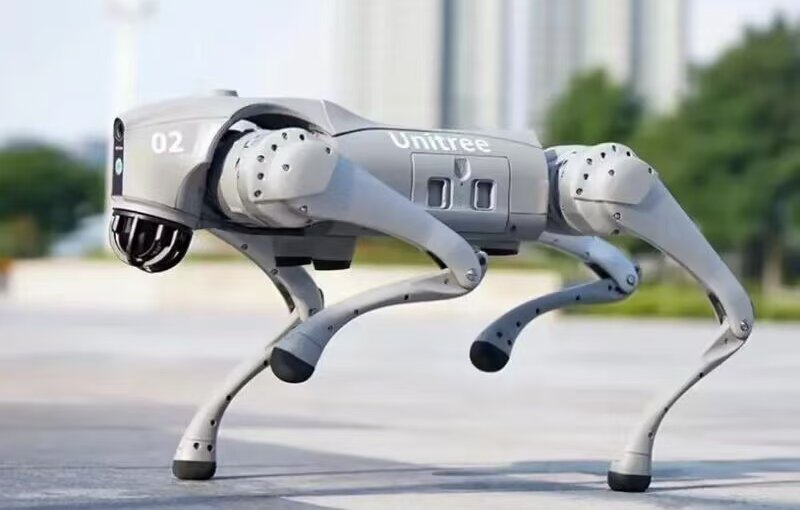
The case dates back to July 2025, when Luweimei—a company primarily engaged in food and daily chemical sales with no connection to robotics—filed two separate lawsuits against Unitree at the Hangzhou Intermediate People's Court based on the same patent (Patent No. CN106384471). Luweimei alleged that Unitree's Go2 and A2 robot dog models infringed the patent. In the A2 case, Unitree countersued Luweimei for malicious litigation, and the court consolidated the hearings.
On September 26, 2025, the Hangzhou Intermediate People's Court dismissed all claims in the Go2 case, finding that Unitree's products did not fall within the scope of Luweimei's patent protection. Luweimei appealed.
During a November 26, 2025 appellate hearing before the Supreme People's Court, Luweimei dramatically increased its compensation claim from 500 yuan to 80 million yuan. The following day, it reduced the claim back to 500 yuan in a written submission.
On February 3, 2026, the Supreme People's Court upheld the lower court's decision, dismissing Luweimei's appeal. In its ruling, the court stated that Luweimei's conduct was "both meticulously calculated and capricious" and violated the principle of good faith, issuing a formal condemnation.
The very next day, the Hangzhou Intermediate People's Court ruled in the A2 case, dismissing all claims and granting Unitree's countersuit. The court found Luweimei's actions constituted malicious litigation and ordered it to pay Unitree's legal expenses amounting to 80,000 yuan. The case has been dubbed the first major intellectual property malicious litigation case of 2026.
In finding malicious litigation, the Hangzhou court cited several factors:
Lack of factual basis: Luweimei filed its A2 lawsuit based on photos, videos, and technical documents rather than purchasing the product for comparison—the same approach used in the Go2 case—despite its legal representative's professional knowledge as the patent inventor.
Abnormal claim amounts: Luweimei claimed only 1,500 yuan in damages while alleging massive infringement and requesting a court audit of Unitree's profits. The court found this strategy was designed to minimize litigation costs rather than stop infringement.
"To avoid bearing higher litigation costs, Luweimei deliberately set its claim amount at an unreasonably low figure, demonstrating its purpose was not to stop infringement but to pressure Unitree for improper gains," the Hangzhou court stated.
This mirrored Luweimei's appellate strategy, where the Supreme Court noted the company sought "on the one hand to avoid the high case acceptance fees required for large claims, and on the other hand to impose additional litigation pressure on the opposing party."
IPO timing and improper purpose: Luweimei filed its lawsuits during Unitree's IPO tutoring period and applied for on-site investigations and evidence preservation, tactics the court found were intended to interfere with Unitree's normal operations. Luweimei also stated during trial that it would continue filing lawsuits against other Unitree models.
History of similar litigation: Court records showed that Luweimei's legal representative and affiliated entities had filed over 20 patent infringement lawsuits against major Chinese banks, with claims ranging from one cent to 100 billion yuan. None were successful, yet the same litigation strategy was repeatedly employed.
The cases have drawn significant attention as a test of China's judicial system's ability to protect innovative companies from what legal experts describe as "litigation traps" during sensitive IPO windows.