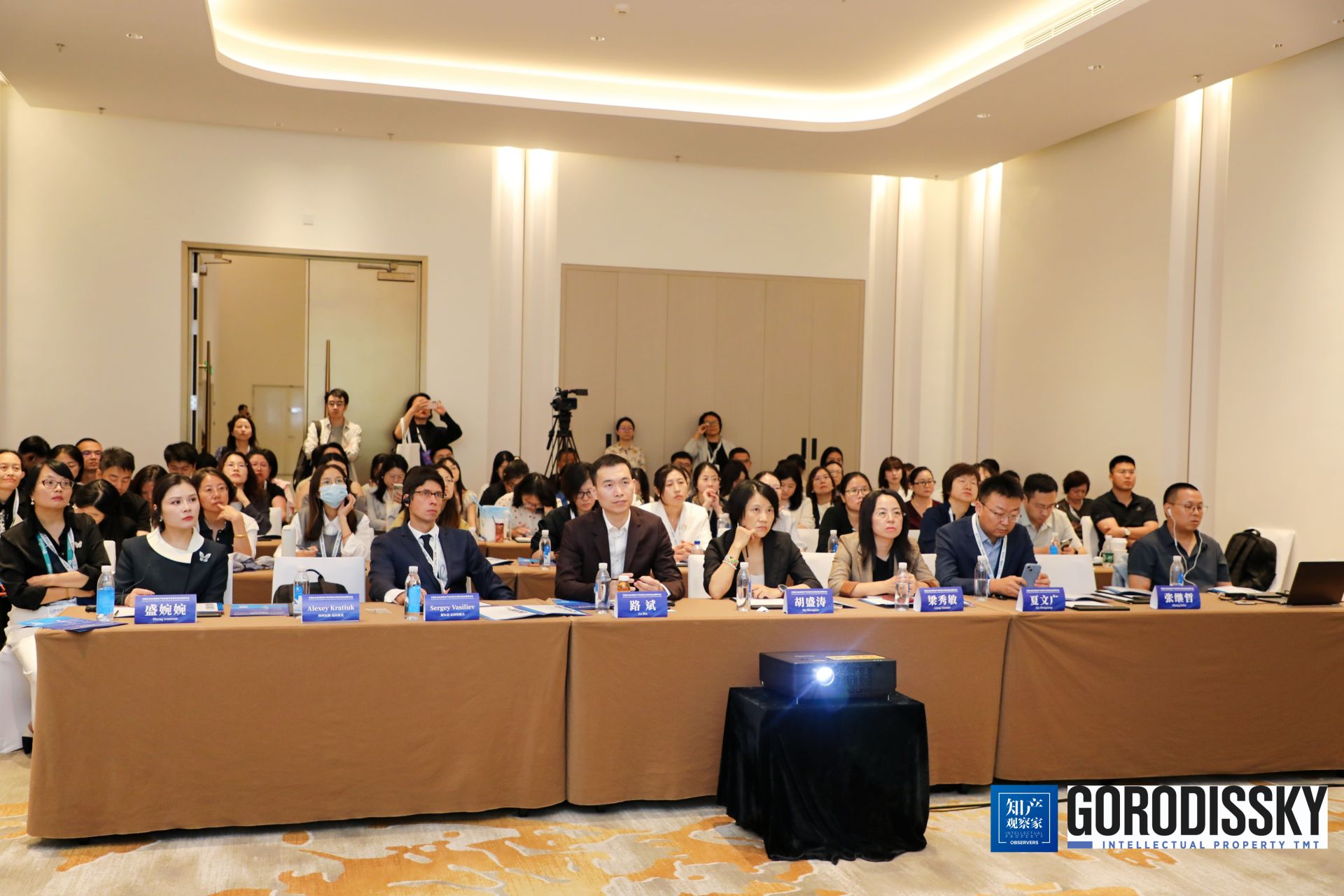


From December 4 to 5, the 15th Business of IP Asia Forum (BIP ASIA), jointly organized by the HKSAR Government and Hong Kong Trade Development Council, was successfully held in Hong Kong. Centered on the theme “Leverage IP to Finance Business Growth,” the forum brought together policymakers, experts, scholars, and business leaders from international organizations, government departments, multinational corporations, and academic institutions across over 30 countries and regions worldwide. They engaged in in-depth discussions on how to effectively leverage IP to drive industrial upgrading and attract strategic investments, thereby injecting robust momentum into the sustainable development of regional economies.
During the forum, Dr. Lorenz Kaiser, Senior Legal Counsel at GE Aerospace, accepted an invitation for an interview with Intellectual Property Observers. As a typical industry characterized by long R&D cycles, substantial investment scales, and high technological barriers, the global aerospace sector faces a critical challenge in balancing IP management with R&D collaborations amid its course of low-carbon and intelligent transformation. With a career spanning both research institutions and multinational corporations, as well as extensive experience in IP and R&D contract management, Dr. Kaiser shared his core insights on IP management in the aerospace sector, strategies for integrating IP with R&D, and his unique perspectives on the prospects for cooperation between Chinese and international aerospace industries.

Career Dedication: A Practitioner of IP Management from Research Institutions to Multinational Corporations
At 73 years old, Dr. Kaiser has devoted nearly his entire career to Fraunhofer-Gesellschaft (Fraunhofer), a world-renowned applied research organization. There, he was deeply involved in IP management, accumulating extensive hands-on experience in drafting R&D contracts, negotiating technology licenses, and protecting IP rights. After retirement, Dr. Kaiser remains actively engaged, serving as Senior Legal Counsel at GE Aerospace while continuing his private consulting practice. "Retirement has never been my passion—it’s simply too boring," Dr. Kaiser remarked with a smile when asked why he continues to work at his age.
"Before retiring, I led a team of nearly 200 people at Fraunhofer, primarily responsible for legal matters related to research contracts, funding applications, and IP. This gave me a deep understanding of the collaboration models between research institutions and enterprises, as well as the mechanisms of IP transfer," Dr. Kaiser explained. "Now, at GE Aerospace, while the focus of my work has shifted, my core competencies remain crucial. The IP management at GE Aerospace is centralized at the U.S. headquarters, and my main responsibility is preparing project contracts, rather than directly handling IP management. The GE research department where I am based is located on a university campus in Munich, where around 100 engineers collaborate on developing the next generation of aircraft engines, with a core focus on reducing fuel consumption and minimizing environmental pollution."
This unique position allows Dr. Kaiser to serve as a crucial link connecting GE Aerospace's R&D department with its IP management system. "Now, I sit right among all the engineers. Whenever they encounter any IP-related questions during the R&D process, they can come directly to me instead of having to contact others. This embedded working model significantly enhances the efficiency of GE Aerospace's R&D efforts," Dr. Kaiser noted.
Dr. Kaiser's very small private consulting practice is equally distinctive. "Today, I focus on issues such as R&D contracts, grant regulations, and patent matters, many of which involve highly specialized and niche areas. In the majority of cases companies come to me when they face sophisticated legal or commercial challenges in technical cooperation that are presently difficult to assess but may cause tremendous future implications ," Dr. Kaiser explained.
Core Insight: The Art of Balancing IP Management and R&D Collaborations
As an expert with decades of experience in IP and R&D contracts, Dr. Kaiser offers unique insights into the pain points of IP management and the delicate balance of interests in R&D collaborations within the aerospace industry and other industrial sectors. Aerospace technology development as well as others often are characterized by long cycles, substantial investments, and high risks, making the establishment of an effective IP management system crucial for mitigating both R&D and financial uncertainties. From Dr. Kaiser’s viewpoint, risk prevention in IP management must be prioritized in branches with high investments and risks, as for example in the aerospace sector, with contract drafting and laboratory engineering support serving as critical junctures for risk control.
"Errors in IP management often originate from the contract signing stage or during laboratory engineering support, which mark the very beginning of the entire R&D process. GE Aerospace's adoption of an embedded IP advisory model is precisely aimed at achieving proactive risk prevention," Dr. Kaiser explained. “When it comes to specific matters such as patent applications or trademark registrations, I refer the engineering team and the management to GE Aerospace's IP management department in the United States. It is this ‘front-end consultation + back-end execution' model that ensures both the timeliness of risk prevention and the professionalism of IP affairs management."
When discussing IP protection approaches, Dr. Kaiser pointed out that much of a company's core knowledge may not actually be suitable for patent protection. "Once a patent is filed, your unique discoveries become public, allowing competitors to gain insight into your R&D direction and even uncover your core competitive advantages," Dr. Kaiser explained. "Therefore, a significant portion of a company's core technology is better protected as trade secrets. Patents are valuable, but trade secrets are equally important. The key lies in selecting the appropriate protection method based on the nature of the technology and the company’s strategy."
In today’s market environment, individual enterprises or institutions often lack all the resources required for aerospace industry R&D, making external collaborations an inevitable choice. However, the process of collaboration involves a constant tension between technology sharing and IP protection. Balancing these two aspects to avoid disputes and enhance collaboration efficiency remains a challenge for many companies. In this regard, Dr. Kaiser believes that the key tool for achieving this balance is structuring cooperation well and creating a beneficial contract background for future success.
"R&D collaborations can be divided into two types: first, bilateral or multilateral collaborations between equal partners; and second, service-based collaborations where companies commission research institutions for product testing, technological development, and similar services," analyzed Dr. Kaiser. "For collaborations between equal partners, contracts must clearly define the rights and obligations of each side, particularly core clauses such as the scope of technology sharing, ownership of R&D outcomes, and risk allocation. In such partnerships, both sides have their own core interests. Cooperation can only proceed smoothly when both parties recognize the value and opportunities it offers. As for service-based collaborations, contracts need to specify the content of the services, acceptance criteria, ownership of outcomes, and other related matters."
"Overall, opportunities and risks always coexist in R&D collaborations. Understanding risks is crucial for safeguarding core interests, while recognizing opportunities ensures that both parties benefit from technology sharing," stated Dr. Kaiser. "Many disputes in R&D collaborations stem from unclear contract terms and ambiguous responsibility allocation. This is precisely why I consistently advocate for concise yet precise contract clauses that clearly define the rights and obligations of all parties involved. Of course, given the unpredictable nature of R&D work and the many unforeseen circumstances that may arise, contract terms should also allow for a degree of flexibility to adapt to changes throughout the R&D process."
As a bridge connecting technology and law, Dr. Kaiser believes that working in IP and R&D contracts requires diverse knowledge and cross-disciplinary communication skills. "This work involves multiple areas such as patent law, liability law, labor law, and grant regulations. One must comprehensively master these legal frameworks to tackle complex real-world issues. For instance, when handling matters related to service inventions, one must understand employee rights under labor law; when applying for government-funded projects, one must be familiar with grant regulations; and when resolving cooperation disputes, one must be proficient in patent and liability law provisions," Dr. Kaiser explained. "At its core, my job is to integrate technology and law. I need to understand engineers, and engineers must also understand me. That’s why strong cross-disciplinary communication skills often play an even more critical role than specialized background knowledge."
Industry Outlook: The Rise of China's Aerospace Industry and New Opportunities for Chinese-Foreign Cooperation
Throughout his long career, Dr. Kaiser has had many connections with China. As early as before the opening of the 2008 Beijing Olympics, he assisted Fraunhofer in collaborating with relevant Chinese institutions to address potential mobile network congestion during the Games. "At that time, both the Chinese government and our partners were concerned that massive mobile phone usage by tourists during the Games could paralyze the network. In response, Fraunhofer provided an antenna layout solution that enhanced network signals without requiring a lot of investment, effectively ensuring the smooth operation of the Olympics," Dr. Kaiser explained. "To date, I have engaged in multiple collaborations with Chinese enterprises and institutions. Although negotiations can be time-consuming, we always take a pragmatic approach and have achieved significant results."
When discussing the development of China's aerospace industry, Dr. Kaiser offered high praise. " As made public in specialized press releases China has made remarkable strides inter alia in aerospace, now being capable of independently developing aircraft, which is an extraordinary achievement." Regarding the future prospects for R&D and IP cooperation between China and European and American nations in the aerospace industry storage technologies and others, Dr. Kaiser also maintains an optimistic outlook.
"The development of challenging industry sectors, such as aerospace requires global collaboration; no single country or enterprise can thrive alone. China's rapid progress in aerospace technology R&D and its vast market demand provide extensive opportunities for multinational collaboration," said Dr. Kaiser. "Today, China, Europe, and the United States each possess distinct advantages. Through R&D collaborations and IP exchanges, complementary strengths can be leveraged to jointly advance the industry’s development."
However, Dr. Kaiser also cautioned that Chinese-foreign cooperations in any technology field must fully account for differences in legal systems, cultural backgrounds, and other aspects. "Patent laws and contract laws vary across countries. It is essential to thoroughly understand these differences before entering into cooperation to avoid disruptions caused by legal issues," he noted. "A clear and explicit contract, which meticulously details core matters such as technology sharing, IP ownership, and risk allocation, is indispensable for ensuring the smooth progress of collaboration," Dr. Kaiser emphasized.
Sowing the Seeds of Innovation: Embracing the Mission of Knowledge Dissemination, Envisioning a Low-Carbon Industrial Future
Throughout his career, Dr. Kaiser has not only focused on practical operations but has also been committed to the dissemination and popularization of IP knowledge. For decades, he has conducted specialized training for engineers, covering patents, contracts, non-disclosure agreements, and relevant laws across various countries. "Many assume that IP training is only for legal professionals, but in reality, engineers—as direct creators and users of technology—have an even greater need to master this knowledge," Dr. Kaiser explained. "During R&D, engineers face various IP risks, such as defining service inventions, protecting trade secrets, and avoiding patent infringements. Addressing and mitigating these risks require systematic IP knowledge."
"Typically, my training sessions span two days: the first day covers foundational topics such as the German legal system, drafting R&D contracts, and IP protection; the second day focuses on examining legal differences in other countries and addressing IP issues in international collaborations." Dr. Kaiser explained, "It’s not easy to get engineers to sit through two full days of training, but they genuinely value such learning opportunities and have provided very positive feedback. After the training, communication efficiency between engineers and legal staff improves significantly, effectively reducing IP risks during the R&D process."
When discussing the future development trends of the aerospace industry, Dr. Kaiser believes that low-carbon transition will be a core direction. "Flying is a wonderful mode of travel, but it is also a significant source of atmospheric pollution. Currently, GE Aerospace’s R&D focus is on developing a new generation of fuel-efficient, low-emission aircraft engines," Dr. Kaiser stated. "This process requires collaboration across multiple disciplines and institutions, involving fields such as materials science, aerodynamics, and thermodynamics. IP protection and management also play a critical role in this endeavor."
"The electrification of automobiles for example provides significant insights for development. The new energy vehicle sector has experienced rapid development in recent years, especially in China, where explosive growth is anticipated in the coming years. Of course, the electrification of aircraft is far more challenging, as planes require enormous amounts of energy, and in my layman perspective current battery technology clearly cannot yet meet the demands of flights. For a considerable period in the future, aircraft will continue to predominantly rely on traditional fuel engines or comparable forms of energy sources – as soon as being developed. However, the industry will persistently pursue technological innovation to reduce fuel consumption and emissions. Meanwhile, breakthroughs in related fields such as battery recycling and alternative fuels will open new pathways and possibilities for the low-carbon transformation of the aerospace industry," stated Dr. Kaiser.
"Even though I’ve reached the age of 73, I still derive immense joy and fulfillment from my work. Every instance where I help businesses overcome challenges and facilitate collaborations brings me great satisfaction. In the future, I hope to continue leveraging my professional expertise to contribute further to the innovative development and IP protection of the global aerospace industry," Dr. Kaiser concluded.